

Predicting Wildfires with Causal AI
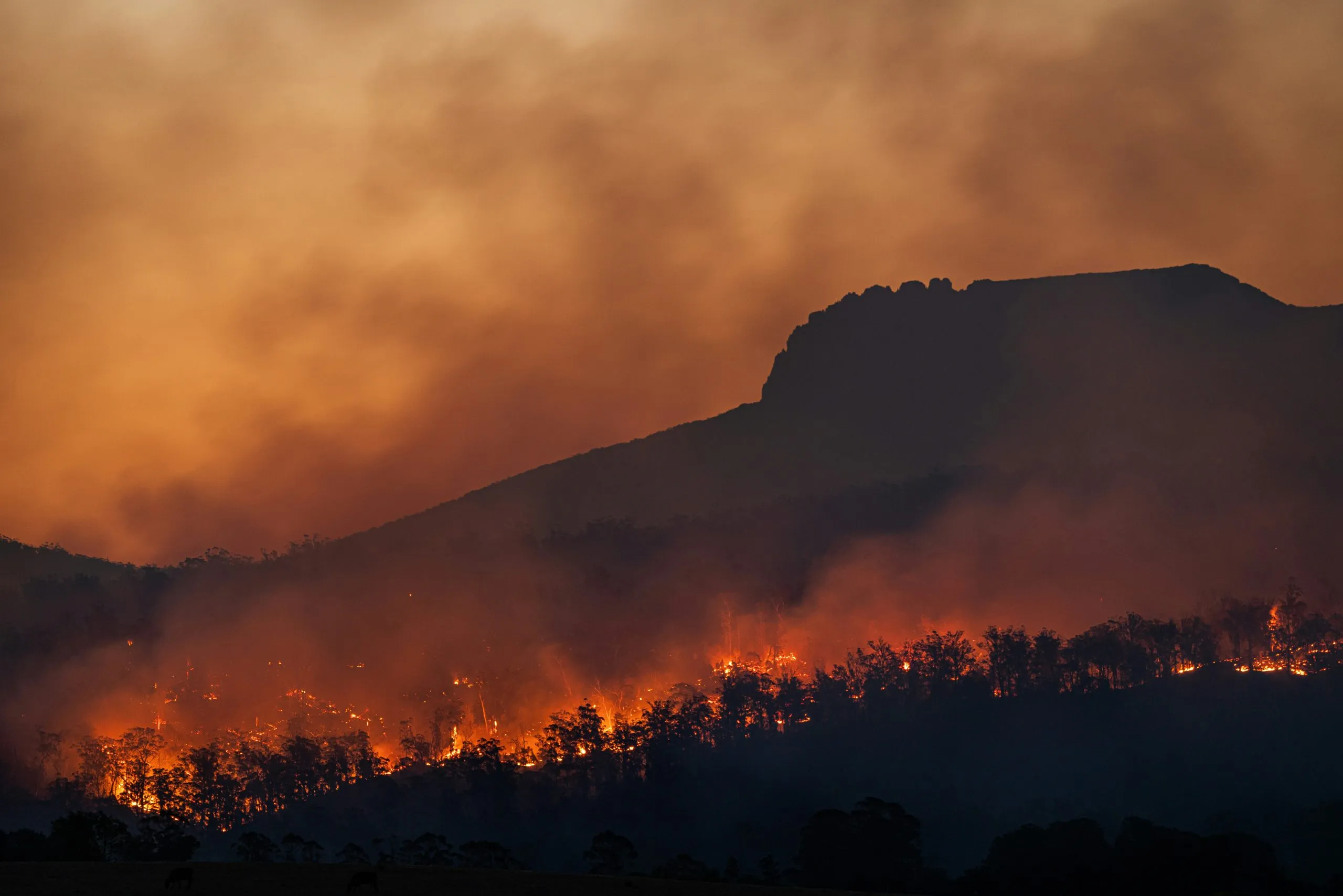
A model that learns what fire patterns look like in historical data may struggle when faced with an unfamiliar landscape, a region with few past fires, or shifting climate conditions.
Instead of asking what tends to happen before a fire, causal networks ask what actually drives fire risk. This makes models more robust, more transferable, and easier to trust.
How Causal Networks Work in Practice
ThinkingEarth uses Graph Neural Networks guided by causal knowledge to model the Earth as an interconnected system. Climate variables, vegetation conditions, and large-scale ocean-atmosphere patterns are represented as nodes in a graph, with connections shaped by scientific understanding of how these factors genuinely influence one another.
The model learns from data — but within a structure grounded in Earth system science.
Explainable AI applied to the model surfaces findings that align with physical reality: local precipitation emerges as a key driver, while ocean-climate indices show a lagged influence on fire activity stretching back several months. These are not just model outputs but the insights into how the Earth system behaves, and they point towards forecasting fire risk at timescales that current operational tools rarely reach.
A Foundation for the Future
ThinkingEarth sees causal networks as a foundation for the next generation of environmental forecasting tools — ones that generalise across regions, remain interpretable to scientists and decision-makers, and improve our understanding of the Earth system.
Read next
ThinkingEarth Talks: UC2B
Building Confidence in Earth Observation
Why Foundation Models Are Transforming Earth Observation
