
Instead of being built for a single task — like mapping forests or detecting floods — these models learn general patterns of the Earth system. Once trained, they can be reused for many applications, across different regions and scales.
ThinkingEarth focuses strongly on learning from diverse data. Satellite images from different sensors (optical, radar, multispectral), maps, and existing labels are combined during training. This helps the models work reliably across countries, ecosystems, and observation conditions — not just in well-studied regions. It also reduces the need for expensive manual annotations.
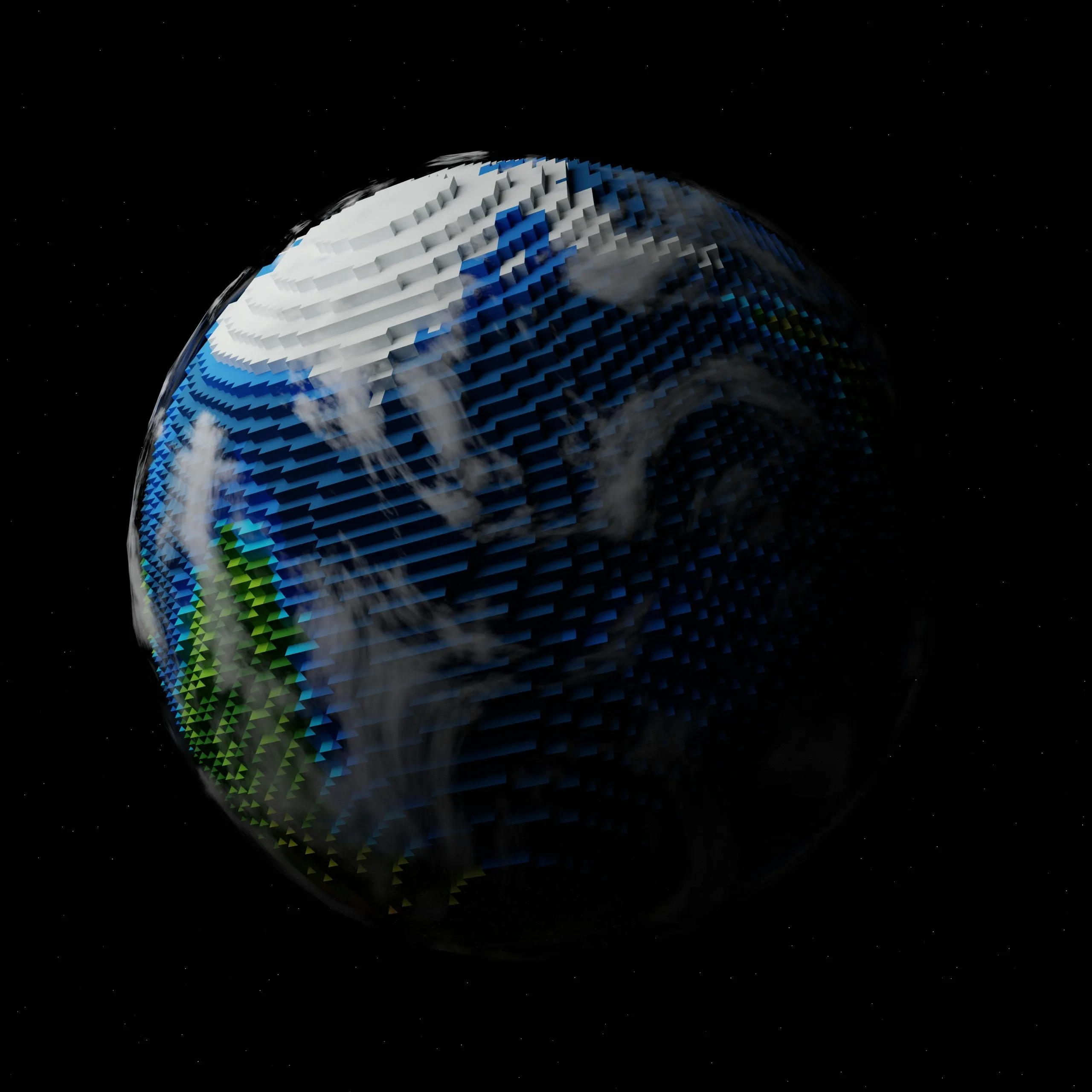
But ThinkingEarth goes beyond individual AI models. A key idea of the project is to represent the planet as a dynamic graph. In this graph, places, environmental variables, and human activities are connected to each other. This makes it easier to link local observations — like land-use change or heat stress in a city — to larger-scale processes such as climate trends or energy demand.
This graph-based view helps address one of the biggest challenges highlighted in the Nature paper: connecting information across space, time, and domains. Instead of treating climate, ecosystems, and society as separate problems, ThinkingEarth connects them within a single structure. Changes in one part of the system can be traced through their impacts on others.
ThinkingEarth also aims to make Earth AI usable, not just accurate. By combining foundation models with language-based AI systems, users will be able to interact with Earth data more naturally — asking questions, exploring scenarios, and understanding uncertainties. This opens Earth intelligence to scientists, policymakers, businesses, and communities alike.
Most importantly, ThinkingEarth is designed with impact in mind. The project applies its foundation models to concrete challenges such as urban sustainability, biodiversity monitoring, energy systems, food security, and climate risk. These applications ensure that advanced Earth AI supports decisions that matter — from local planning to global policy.
In this way, ThinkingEarth turns the idea of Earth foundation models into a working planetary intelligence system. It moves from simply observing the Earth to reasoning about it, helping society understand complex changes and act more effectively in a rapidly evolving world.