
Predicting Wildfires with Causal AI

News Item
29 May 2026

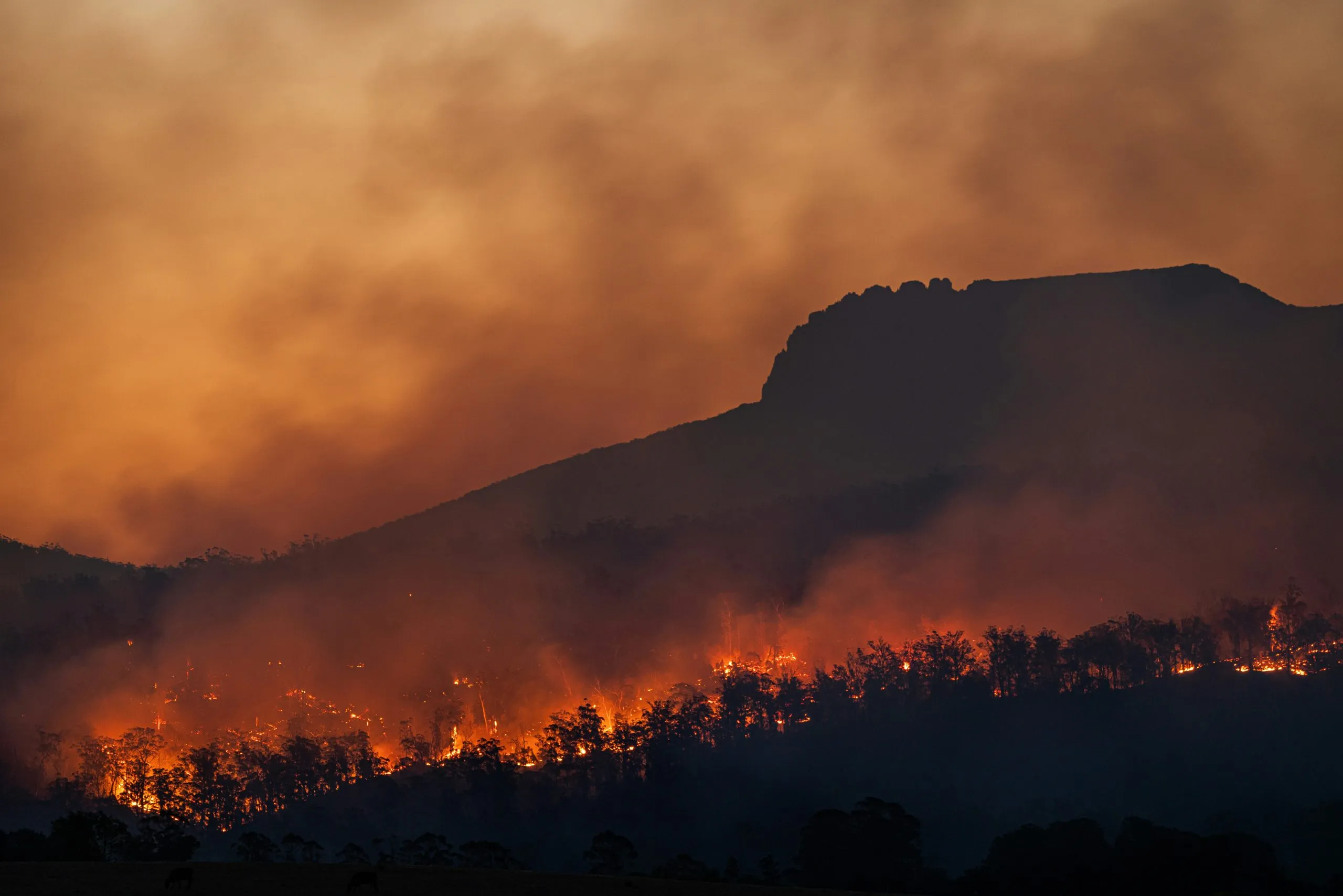
Wildfires are becoming more frequent and harder to predict. Knowing where and when they might strike — weeks or even months in advance — could save lives, ecosystems, and livelihoods.

A model that learns what fire patterns look like in historical data may struggle when faced with an unfamiliar landscape, a region with few past fires, or shifting climate conditions.

Instead of asking what tends to happen before a fire, causal networks ask what actually drives fire risk. This makes models more robust, more transferable, and easier to trust.


How Causal Networks Work in Practice

ThinkingEarth uses Graph Neural Networks guided by causal knowledge to model the Earth as an interconnected system. Climate variables, vegetation conditions, and large-scale ocean-atmosphere patterns are represented as nodes in a graph, with connections shaped by scientific understanding of how these factors genuinely influence one another.

The model learns from data — but within a structure grounded in Earth system science.

Explainable AI applied to the model surfaces findings that align with physical reality: local precipitation emerges as a key driver, while ocean-climate indices show a lagged influence on fire activity stretching back several months. These are not just model outputs but the insights into how the Earth system behaves, and they point towards forecasting fire risk at timescales that current operational tools rarely reach.


A Foundation for the Future

ThinkingEarth sees causal networks as a foundation for the next generation of environmental forecasting tools — ones that generalise across regions, remain interpretable to scientists and decision-makers, and improve our understanding of the Earth system.

Read next


5 Ways ThinkingEarth Helps the Planet
News Item
21 April 2026

5 Ways ThinkingEarth Helps the Planet

Every April, Earth Month reminds us of the importance of protecting our planet. But beyond awareness, innovation plays a crucial role in driving real change. One initiative leading this transformation is ThinkingEarth — a Horizon Europe project using advanced Artificial Intelligence (AI) and satellite data to better understand and protect Earth as one interconnected system. Here are five impactful ways ThinkingEarth is helping the Earth.
Rethinking Flood Intelligence: How ThinkingEarth Advances AI for a Changing Climate
News Item
31 March 2026

Rethinking Flood Intelligence: How ThinkingEarth Advances AI for a Changing Climate

As climate change accelerates, floods are becoming not only more common, but also more intense and less predictable. Addressing this growing challenge requires more than reactive measures—it calls for a fundamental shift in how we observe, model, and respond to the Earth system. This is at the core of the ThinkingEarth initiative.
ThinkingEarth: Causal AI for Food Security
News Item
26 February 2026

ThinkingEarth: Causal AI for Food Security

ThinkingEarth views the planet as a complex, unified, and interconnected system in which climate, markets, ecosystems, and human behavior continuously interact. To understand food insecurity, we must analyse these systems together rather than in isolation.
Newsletter of the project Thinking Earth

Stay tuned and subscribe to our quarterly newsletter

By submitting your e-mail address, you agree to our privacy policy for the site.